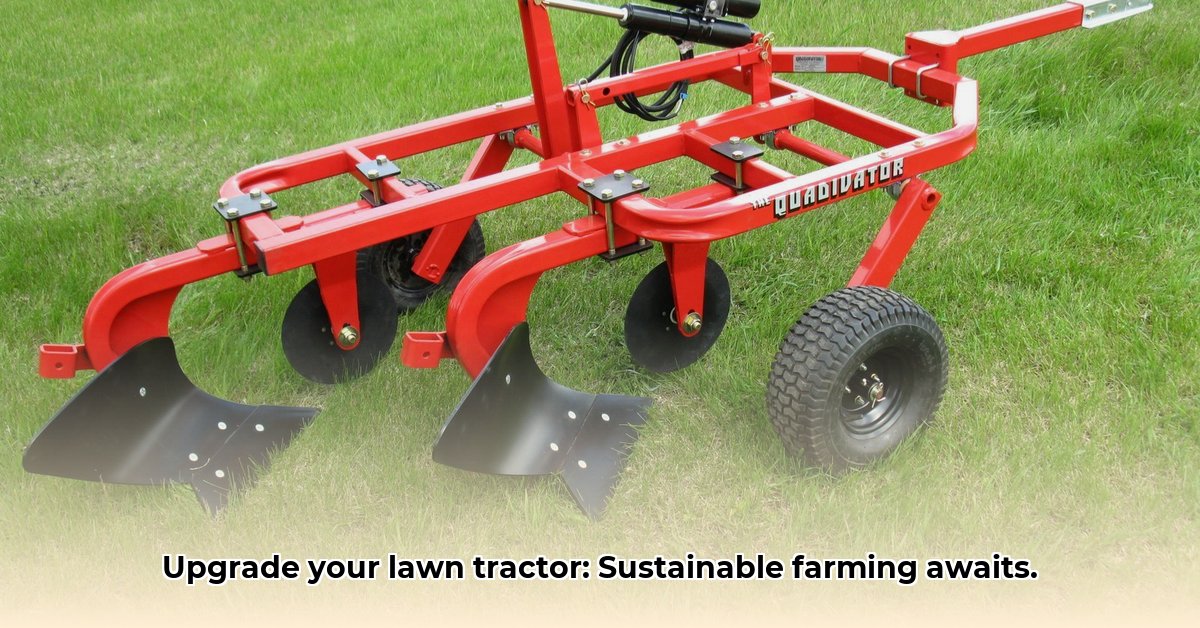
Pull-Behind Plows for Lawn Tractors: Your Guide to Sustainable Soil Management
Thinking about sustainable small-scale farming? A pull-behind plow for your lawn tractor offers a surprisingly effective and efficient way to till your land. This guide provides actionable steps to help you select, use, and maintain a plow, maximizing its benefits for your sustainable farming practices. For more information on powerful lawn tractors, check out this helpful resource: Four Wheel Drive Tractors.
Choosing the Right Plow: Finding Your Perfect Match
Selecting the right pull-behind plow is crucial for sustainable farming. Several key factors influence your choice:
1. Tractor Horsepower: A more powerful tractor can handle a larger, heavier plow without strain. Underpowering a plow leads to inefficient operation and potential equipment damage. Think of it like this: a small car towing a large trailer will struggle.
2. Land Size and Soil Type: The size of your plot dictates the plow's size. Heavy clay soils require a robust plow, while lighter soils might manage with a lighter option. The plow's design should match the soil's characteristics to maximize efficiency and minimize compaction.
3. Plow Material: Steel plows are durable but heavier, placing more strain on your tractor. Aluminum or composite plows are lighter but may have a shorter lifespan. Choose based on your soil type, tractor capabilities, and long-term sustainability goals.
4. Compatibility: Ensure your chosen plow's hitch perfectly fits your lawn tractor. Check both manuals to avoid mismatches that can lead to accidents.
Setting Up and Operating Your Plow: A Step-by-Step Guide
Safe and effective plow operation is paramount. Follow these steps:
Step 1: Attaching the Plow: Securely connect the plow to your tractor's hitch. Double-check connections to ensure safety; a loose hitch is dangerous.
Step 2: Depth Adjustment: Adjust the plowing depth. Start shallow and gradually increase as needed. Overly deep plowing compacts the soil, hindering plant growth. Aim for even tillage throughout your plot.
Step 3: Plowing Process: Start at one edge and make straight, overlapping passes for uniform tillage. Overlapping prevents missed patches and ensures even soil preparation.
Step 4: Monitoring Progress: Regularly observe your work. Adjust the plow's depth or angle as needed to maintain consistent results. Uneven plowing wastes time and energy.
Step 5: Safety Precautions: Always wear safety glasses and sturdy shoes. Keep children and pets away. Never leave a running tractor unattended.
Maintenance and Care: Keeping Your Plow in Top Shape
Proper maintenance is crucial for longevity and efficiency.
- Cleaning: After each use, remove mud and debris.
- Inspection: Check for loose bolts or damaged parts. Tighten or replace as needed.
- Lubrication: Regularly lubricate moving parts to reduce wear and tear.
- Storage: Store the plow in a dry place to prevent rust.
Troubleshooting: Addressing Common Issues
If your plow isn't performing optimally, check these:
- Depth Setting: Is the depth correctly adjusted for the soil type?
- Hitch Connection: Are all hitch connections secure?
- Blade Condition: Are the blades sharp? Dull blades reduce effectiveness and can damage soil.
- Tractor Horsepower: Is your tractor powerful enough for the job and the soil conditions?
Weighing the Pros and Cons: Is a Pull-Behind Plow Right for You?
Pull-behind plows offer several benefits but also have limitations. Consider these points:
Advantages: Environmentally friendly, often uses less fuel than larger equipment. Ideal for smaller farms and home gardens. Improves soil aeration and drainage. Relatively inexpensive.
Disadvantages: Less efficient for extensive areas. More labor-intensive than large-scale equipment. May compact soil if not used carefully. Requires regular maintenance and storage. Less versatile.
The Bigger Picture: Sustainable Farming Practices
A pull-behind plow is one tool in a larger sustainable farming strategy. Consider integrating these:
- Crop Rotation: Rotating crops helps maintain soil fertility and reduce pest and disease problems.
- Cover Cropping: Planting cover crops helps improve soil health and prevent erosion.
- No-Till Farming: Minimizing tillage protects soil structure and biodiversity improving its long-term health.
With proper use and care, your pull-behind plow can significantly benefit your sustainable farming practices. Remember to choose the right tools for the job and keep a sharp eye on their maintenance.